The smallest yard on our street used to be the one people slowed down for. It was not wide, rare, or expensive. There was a strip of bed along the walk, a few containers near the steps, and a fence that could have made the whole place feel boxed in. What saved it was not variety. It was restraint.
The same flowers appeared more than once. A white edge repeated near the path and again under the mailbox. Taller airy stems showed up behind the middle of the bed, not everywhere. One strong flower color returned in three small groups, so the eye kept finding it instead of stopping at the first bloom and running out of places to go.
That is the real trick with a small yard. You are not trying to make it look packed. You are trying to make it feel like there is more to notice than the square footage suggests.
Before choosing flowers, stand where you actually see the yard most often. That might be the front step, the kitchen window, the parking spot, or the chair you drag outside in the evening. A small yard needs to work from those everyday views first. The prettiest plant in the back corner does not help much if nobody ever sees it.
A flower earns its place when it does more than bloom once. In a modest yard, the most useful flowers create depth, cover edges, repeat color, attract movement, or give you a reason to cut a few stems for the house. If a plant only looks good in a nursery pot at peak bloom, it may not be generous enough for limited space.
I would build the planting around one airy flower, one strong color flower, one edging flower, and one vertical flower. That gives you height, color, softness, and rhythm without turning the yard into a sampler tray.
Cosmos are one of the easiest ways to add height without making a small yard feel closed in. The leaves are fine, the stems move, and the flowers hover rather than sit heavily. That matters near fences, walls, and narrow beds, where dense plants can make the boundary feel even closer.
Use cosmos in the back third of a sunny bed or behind lower mounds of flowers. Do not plant them as a solid hedge. Let them appear in a loose group so you can see through them to the fence, gate, or plants behind them. That see-through quality is what makes the yard feel deeper.
Cosmos are also a good teacher. If the soil is too rich or the plants are fed too generously, they can grow leafy and floppy. In a small yard, floppy reads as clutter fast. Give them sun, decent drainage, and enough room to lean a little without falling over the path. Cut stems for a vase or remove fading flowers before they spend too much energy on seed.
Zinnias are not subtle, which is why they are useful. A small yard often needs one flower that can carry color confidently from a distance. Zinnias do that better than many fussy annuals, and they reward beginners quickly once the weather is warm.
The mistake is buying a mix because the packet looks cheerful. A full rainbow can work in a cutting patch, but in a small visible yard it often makes the space feel busier. Choose a mood instead. Coral and apricot feel warm near brick. White and lime can cool a hot entrance. Cherry, rose, and salmon can make a plain fence feel more deliberate.
Plant zinnias in sun with enough airflow around them. Water the soil, not the leaves, because crowded damp foliage can invite mildew. If you cut flowers while they are fresh, the plants usually keep trying. That is another reason they work in small yards: the garden gives indoors a few stems, and the cutting keeps the outdoor display moving.
Every small yard has seams: the line where mulch meets path, where a pot meets paving, where a young bed still has more bare soil than leaves. Sweet alyssum is valuable because it softens those seams without stealing space.
It stays low, smells lightly sweet, and makes a new planting look less unfinished. Tuck it at the front of a bed, around the shoulder of a container, or near a step where the scent can be noticed without announcing itself. White is the easiest color to repeat because it connects unrelated flowers and brightens shade at the edge of a sunny bed.
In real summer heat, alyssum may pause or look tired. That does not mean it failed. Shear it lightly, keep it from drying hard, and let it return when nights cool. In a small yard, even a temporary edge plant can be worth using if it helps the first half of the season look cared for.
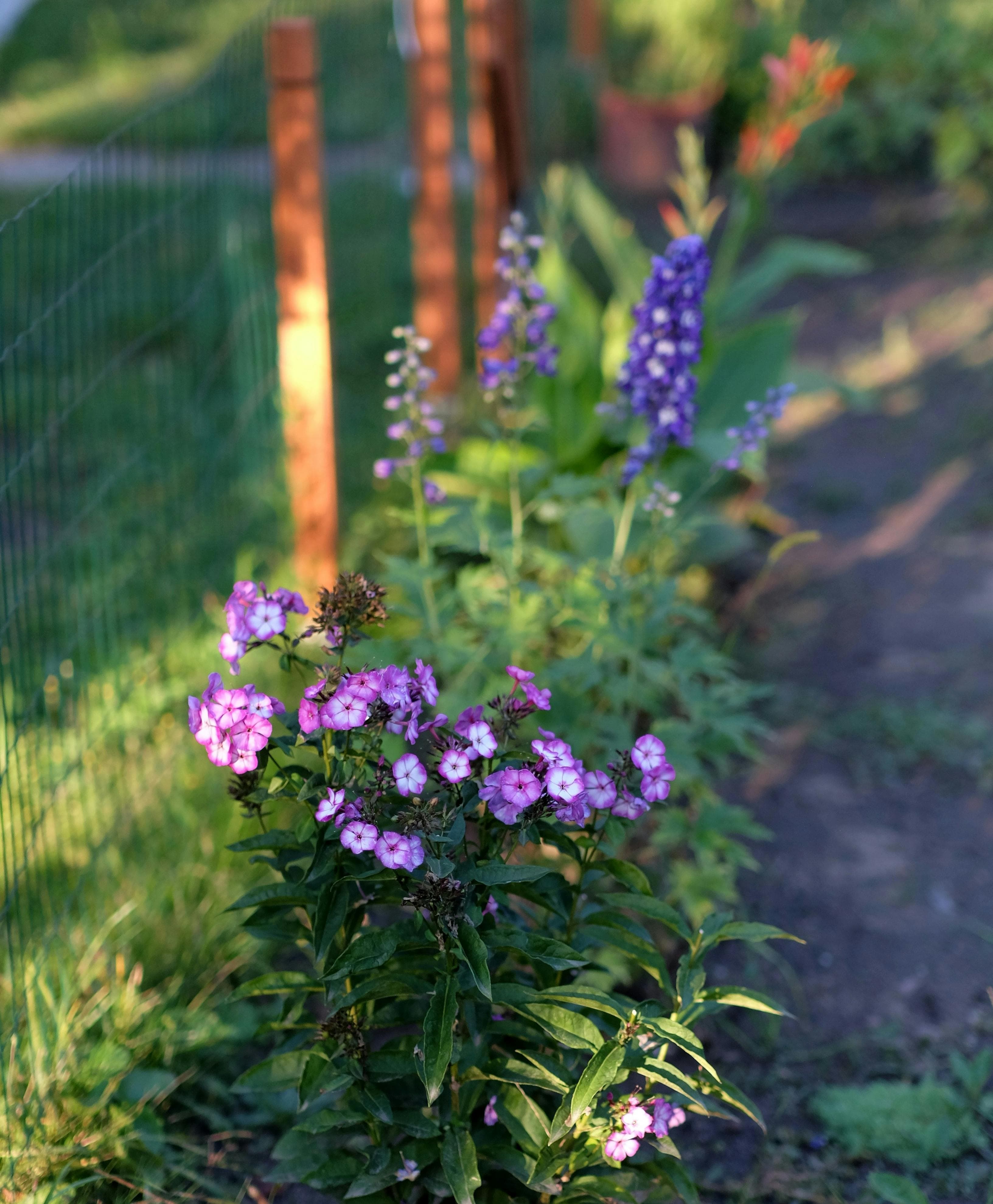
A small yard can have plenty of flowers and still feel shapeless. Salvia fixes that. The spikes give the bed an upright rhythm, and that vertical line helps rounder flowers look more intentional.
Use compact salvia in repeated groups rather than one plant standing alone. One salvia can look like an accident. Three near the walk and three near a container start to feel like a design choice. Bees will find the flowers, but the human benefit is just as important: the bed gets punctuation.
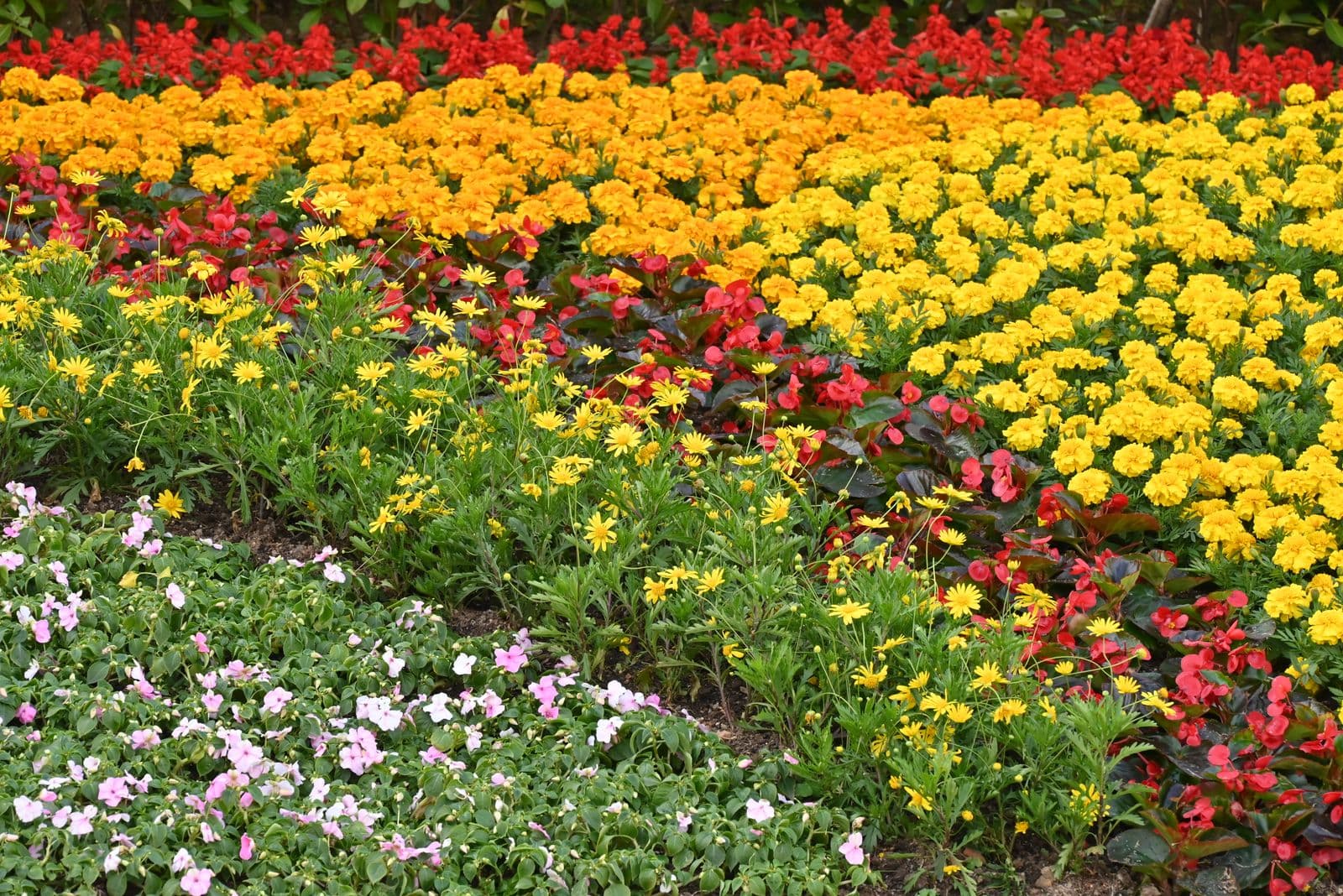
Salvia is especially helpful beside zinnias, calendula, low roses, and soft edging plants. The contrast between spikes, disks, and mounds makes a small planting feel layered without needing more varieties.
The front edge decides whether abundance looks generous or messy. This is where dianthus, low calendula, sweet alyssum, and compact annuals earn their keep. They let taller flowers be loose behind them because the border still has a clean face.
Dianthus is good where the garden is seen up close: along a walkway, around a mailbox bed, or beside a patio. The foliage is neat, the flowers are low, and many types bring a clove-like scent. Give it sun and drainage rather than heavy wet soil.
Calendula plays a different role. It is warmer, looser, and more cottage-like. I would use it where the edge can be cheerful rather than formal, especially early in the season while summer flowers are still building. Deadhead for more bloom, or let a few flowers set seed if you like a slightly self-renewing look.
For a sunny small yard, I would start with cosmos at the back, zinnias through the middle, salvia repeated in two or three small groups, and sweet alyssum at the front edge. If the bed needs early color, add calendula. If the edge needs to be neater, use dianthus instead.
The important part is not the exact shopping list. It is the pattern. Tall and airy goes behind. Strong color repeats through the middle. Low flowers finish the seam. Upright spikes create rhythm. Once that pattern works, you can change the plants for your climate without losing the design.
Leave some space at planting. Small yards are often overplanted because empty soil feels embarrassing. Mulch the gaps and wait. Plants that have room to mature look more expensive than plants that are crowded from the start.
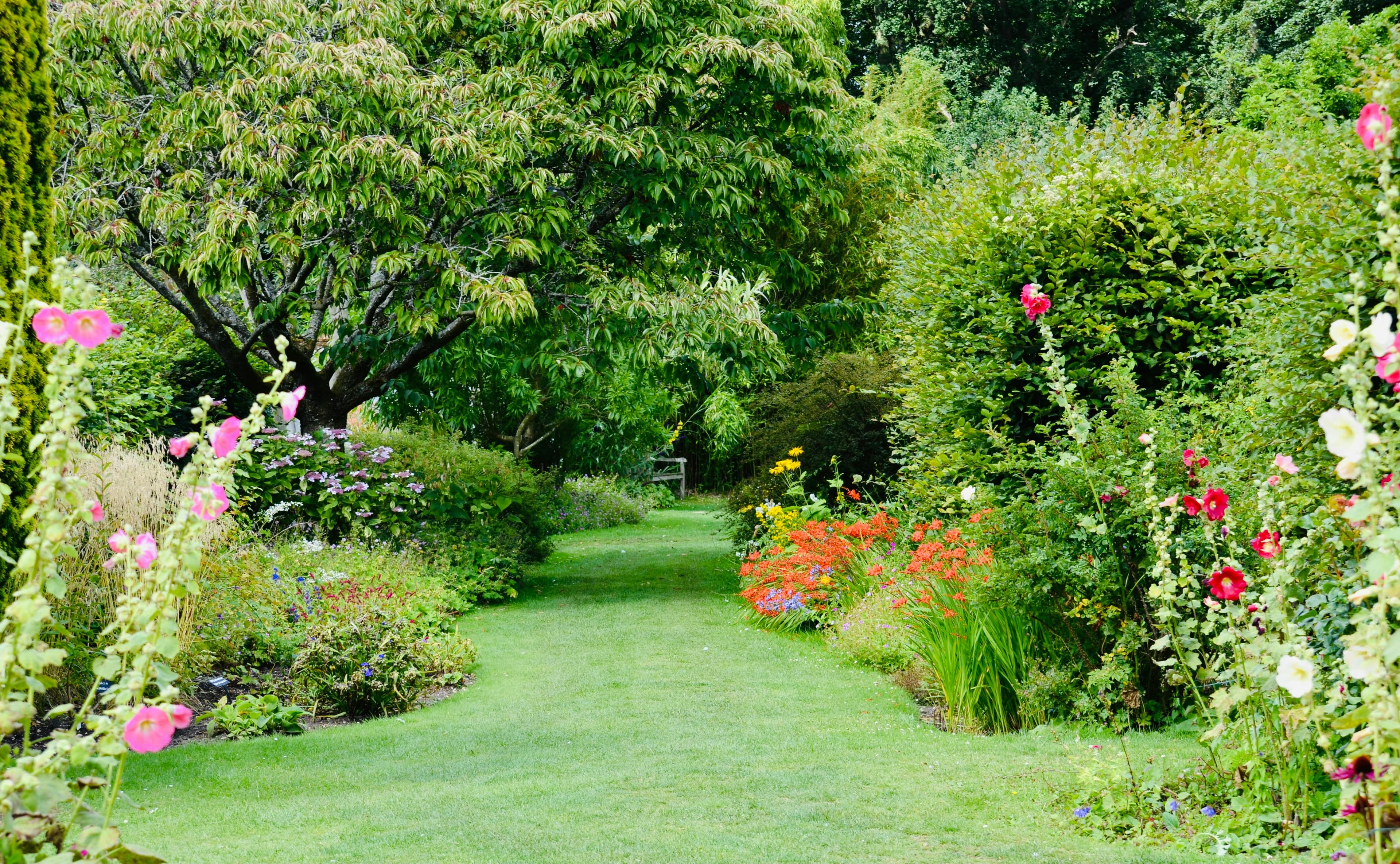
Cut flowers before they fade hard. Deadhead the plants you are not cutting. Water deeply at the soil instead of sprinkling leaves. Keep the front edge clear enough that the garden reads as cared for even when the middle is in full summer looseness.
Once a month, stand back and ask whether the yard needs more flowers or more editing. Often the answer is editing. Remove one weak plant. Repeat one color in a pot. Trim the alyssum. Tie in the cosmos. A small yard becomes generous through attention, not through constant additions.
The biggest mistake is still the nursery-cart mistake: one of everything because every label looks promising. A generous small yard is more disciplined than that. It lets a few flowers do their jobs well enough that the space feels larger, calmer, and more alive than it really is.