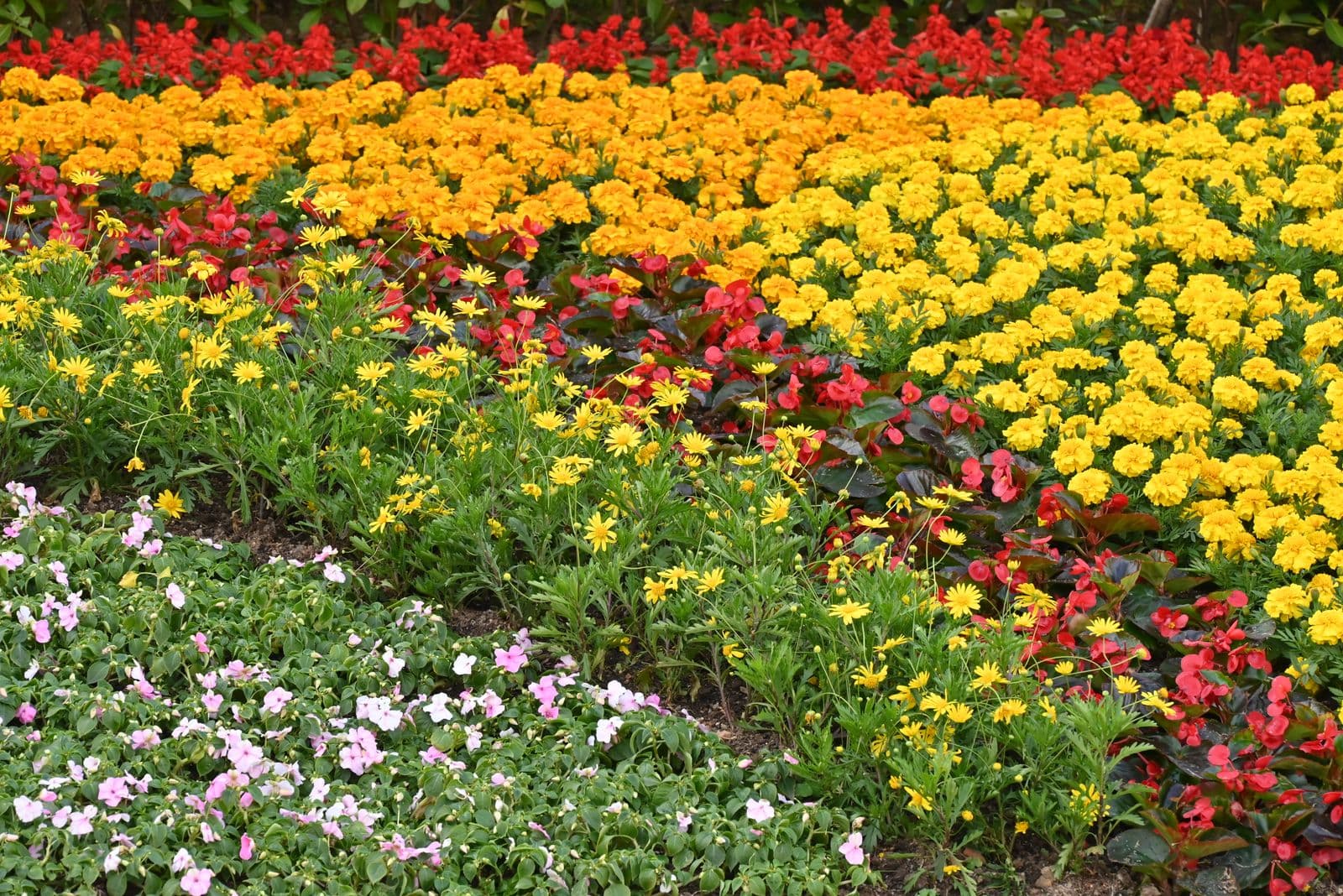
A pollinator garden does not have to look abandoned to be useful. I learned that from a narrow border outside a library, where children watched bees work through purple salvia while the bed still had a clean brick edge and enough order to satisfy the maintenance crew.
Nothing about that border felt sterile. There were seedheads, movement, insects, and plants leaning into one another by late summer. But the front line stayed clear. The tallest plants were not flopping over the sidewalk. The same flowers appeared in patches, so even people who did not know the plant names could read the pattern.
That is the standard I would use at home: habitat inside a frame. The pollinators get nectar, pollen, host plants, and shelter. The gardener gets a border that neighbors understand as intentional.
Pollinator planting fails visually when every good plant is treated as equally important. A bed with one coneflower, one milkweed, one bee balm, one aster, one yarrow, one salvia, and one grass may sound diverse, but it often looks nervous. Pollinators also benefit from finding repeated patches rather than isolated single plants scattered like labels in a collection.
The cleaner approach is to choose fewer plants and give each one enough presence to be found. Repeat them in drifts, blocks, or loose groups. Then use an edge, path, low plant, or mulch line to show where the garden begins and ends.
This is not about making the bed less alive. It is about making the life legible.
Salvia is useful because it gives the border an early, readable shape. The spikes stand upright, the color is clear, and bees tend to find it quickly. In a front-yard border, that early order matters. It tells people this is a planted bed before the looser summer flowers take over.
I would use salvia near the front or middle, repeated in small groups. Not one plant. Not a dozen colors. A few repeated clumps are enough. After the first flush, cut back spent stems so the plant does not sit there with brown wands while everything else is trying to look fresh.
Salvia also buys time. While slower perennials are still making leaves, it gives the bed a reason to exist.
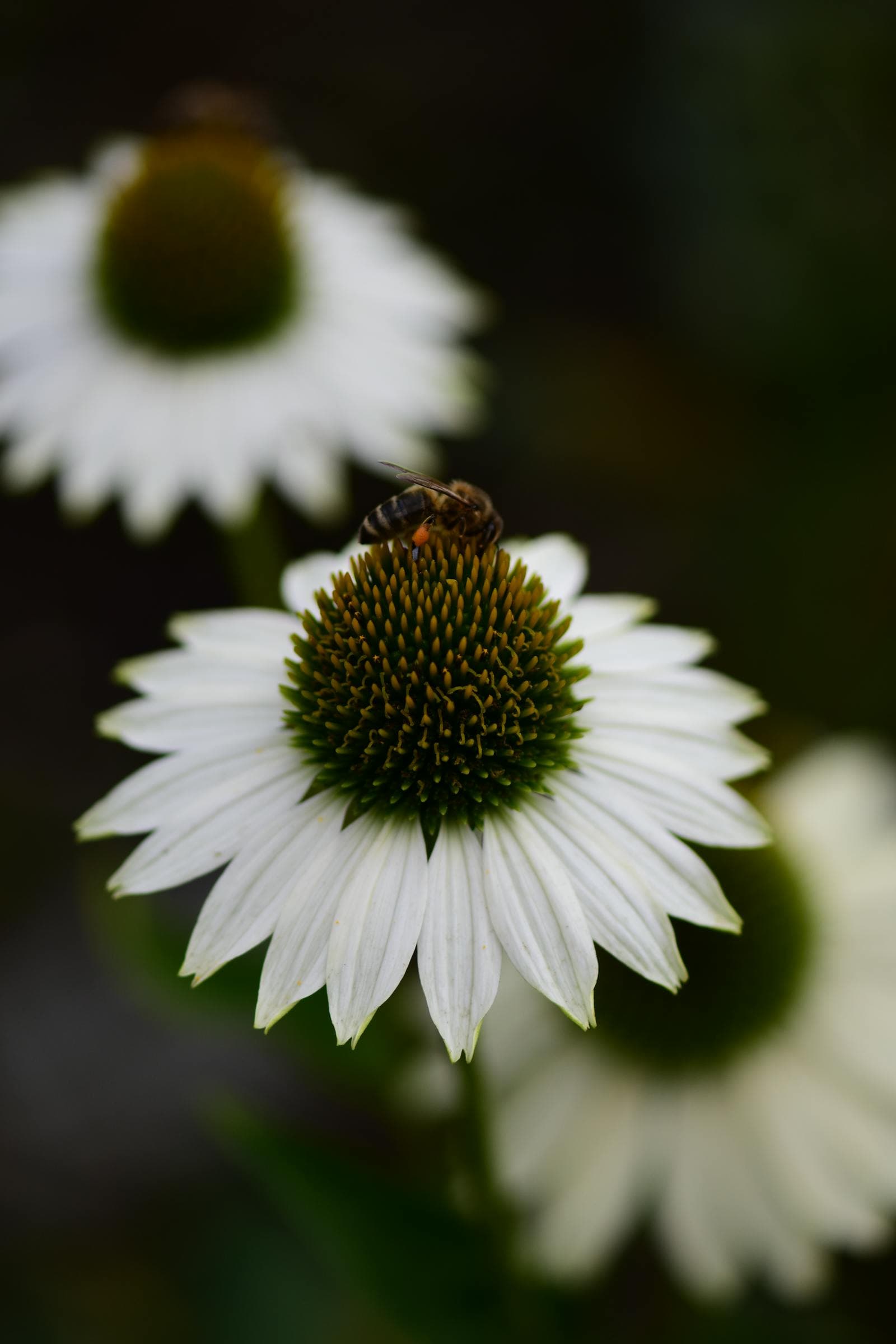
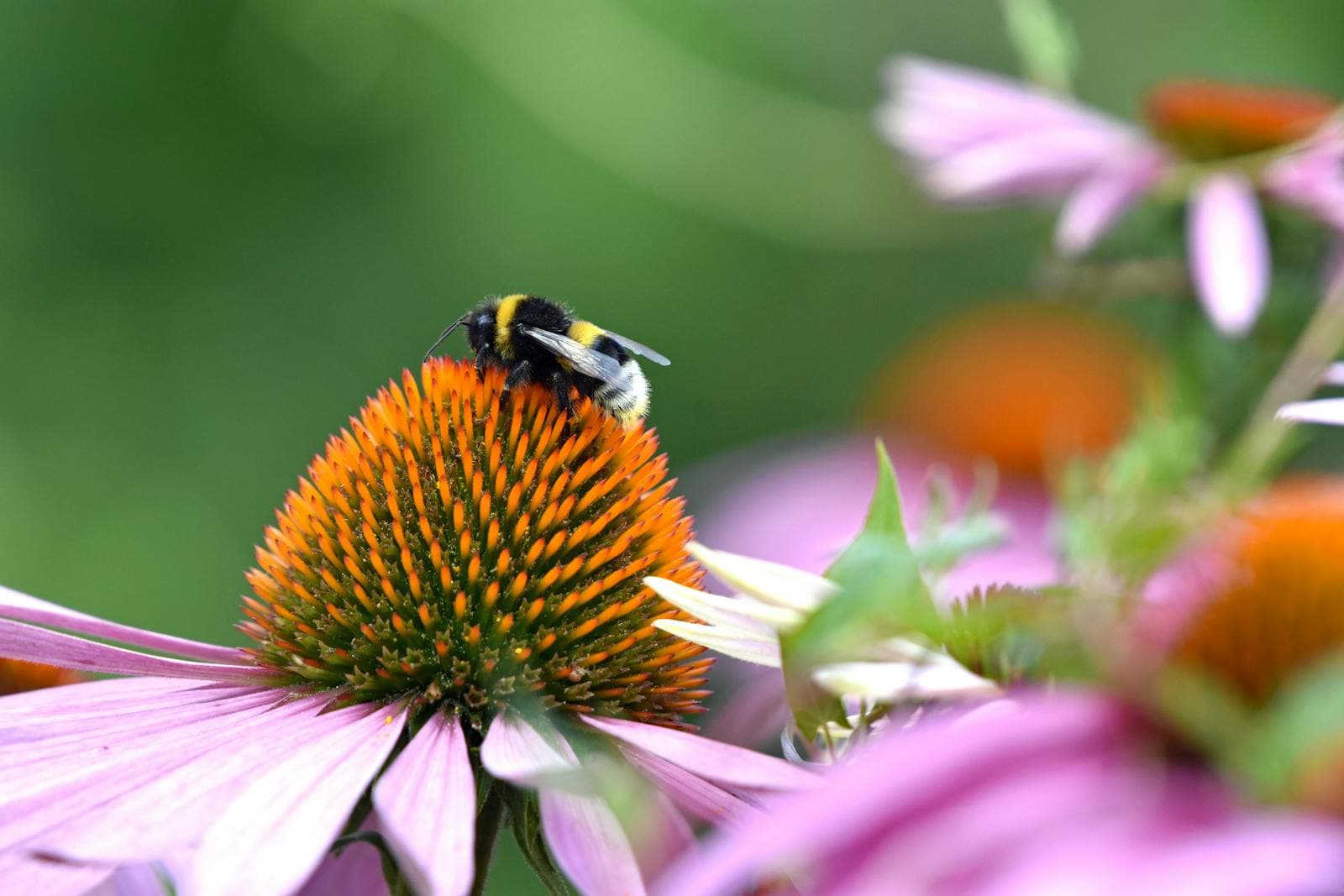
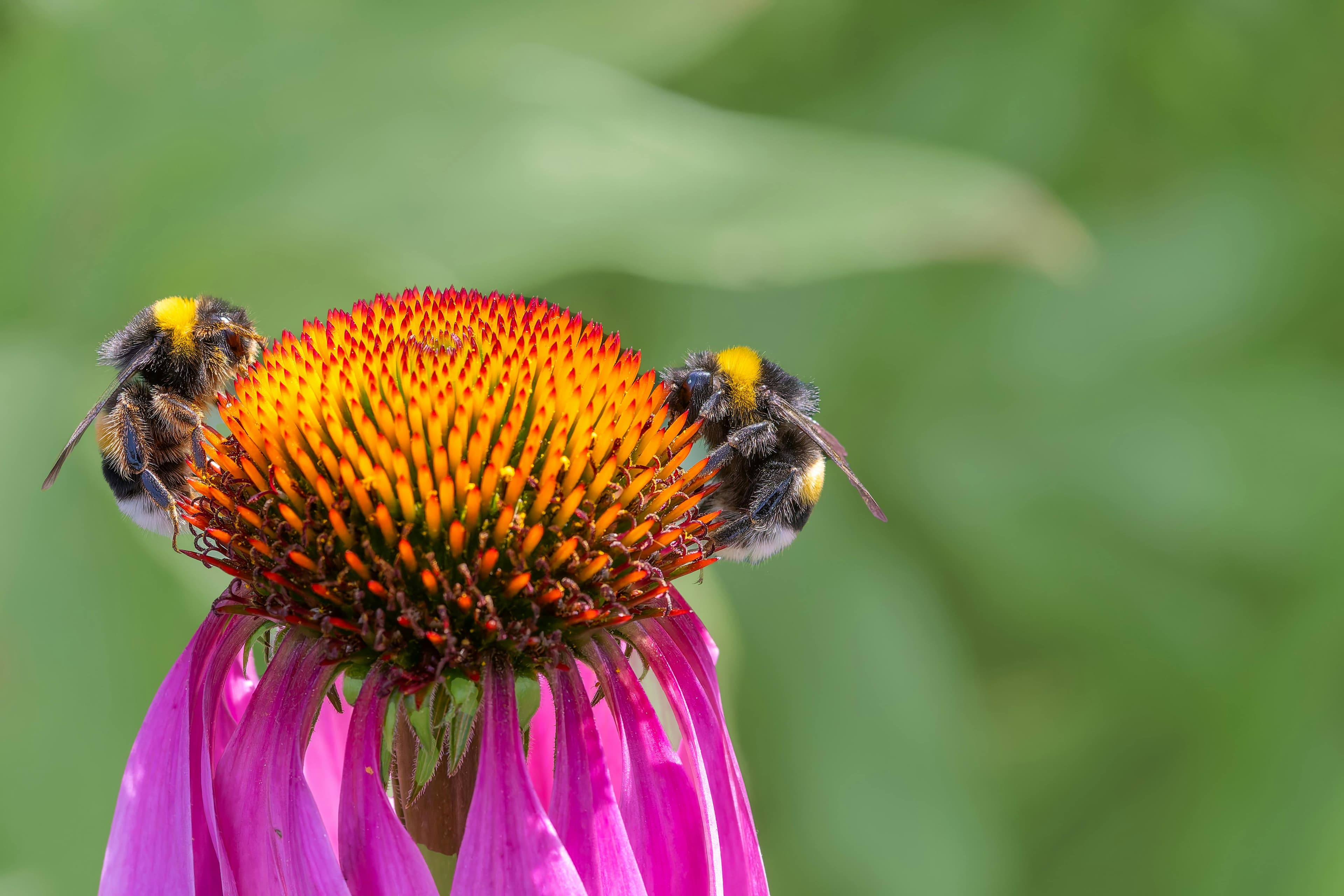
Coneflowers are the summer backbone of many pollinator borders because they are easy to understand from both sides of the relationship. Bees and butterflies use the flowers. Gardeners get a strong stem, a familiar shape, and seedheads that can remain attractive after petals fade.
In a tidy border, I would avoid dotting coneflowers everywhere. Put them where they can form a middle layer. Three, five, or seven plants of a similar color will usually look calmer than a mixed row of singles. If the border is seen from the street, that repetition reads from farther away.
Later in the season, leave some seedheads for birds and winter structure, but do not confuse wildlife value with never editing. If a stem collapses over the path or mildewed foliage becomes the first thing people see, remove it. The border can be generous without being careless.
Anise hyssop belongs near the human edge of a pollinator border, not because it is precious, but because it rewards being noticed. The flowers pull in bees for a long stretch, and the leaves carry scent when brushed. That makes it a good bridge between habitat and garden.
Place it where a path, gate, or front walk comes close, but do not let it lean into the walking space. It pairs well with coneflower and black eyed Susan because the spikes loosen the heavier daisy shapes. It also makes a useful transition between a more formal front edge and a wilder middle.
If it self-sows, edit early. Seedlings are easier to move or remove when they are small. A tidy pollinator border is not a static picture; it is a living planting that gets edited before it loses the shape you meant to keep.
Some of the best pollinator plants are not the ones that make the loudest photograph. Mountain mint is a good example. From a distance it can look pale and restrained. Up close it may be one of the busiest places in the bed, drawing bees, wasps, small butterflies, and other beneficial insects.
That quietness is useful in a designed border. Mountain mint can calm stronger colors, especially yellows and purples, while still doing serious ecological work. The important thing is to give it a defined patch. Do not let it blur through the whole bed unless you want a looser meadow effect.
A spade edge, a repeated clump, or a neighboring grass can keep it visually contained. The plant can be generous to insects and still have boundaries.
Black eyed Susan can make a pollinator bed feel friendly instead of worthy. The yellow is familiar, durable, and visible from the sidewalk. That matters if the border is in a front yard or shared space where you want habitat to look welcoming.
Use it in the middle layer, not as a random filler. Yellow can dominate a small border if it appears everywhere, but repeated groups can also tie the whole planting together. Pair it with purple salvia, blue anise hyssop, or fine grasses so the color has contrast.
Like many useful plants, it may seed around. That is not automatically bad. Keep the seedlings that strengthen the pattern and remove the ones that crowd the edge. Editing volunteers is part of maintaining a pollinator border, not a sign that the garden has failed.
A pollinator border that peaks in June and gives up by August is not doing the whole job. Late-season flowers matter because bees, butterflies, and other insects still need food after many garden favorites have slowed down. Asters are one of the easiest ways to carry that handoff.
The trick is choosing and placing them with the border in mind. Tall, loose asters can be beautiful in a meadow-like back edge, but they may look chaotic beside a front walk. Compact varieties or pinched plants are better where tidiness matters. Pinching in early summer can help keep growth fuller and shorter.
Let asters own the fall moment. A tidy garden does not have to be a static green bed after Labor Day. It can change seasons visibly, as long as the change looks planned.
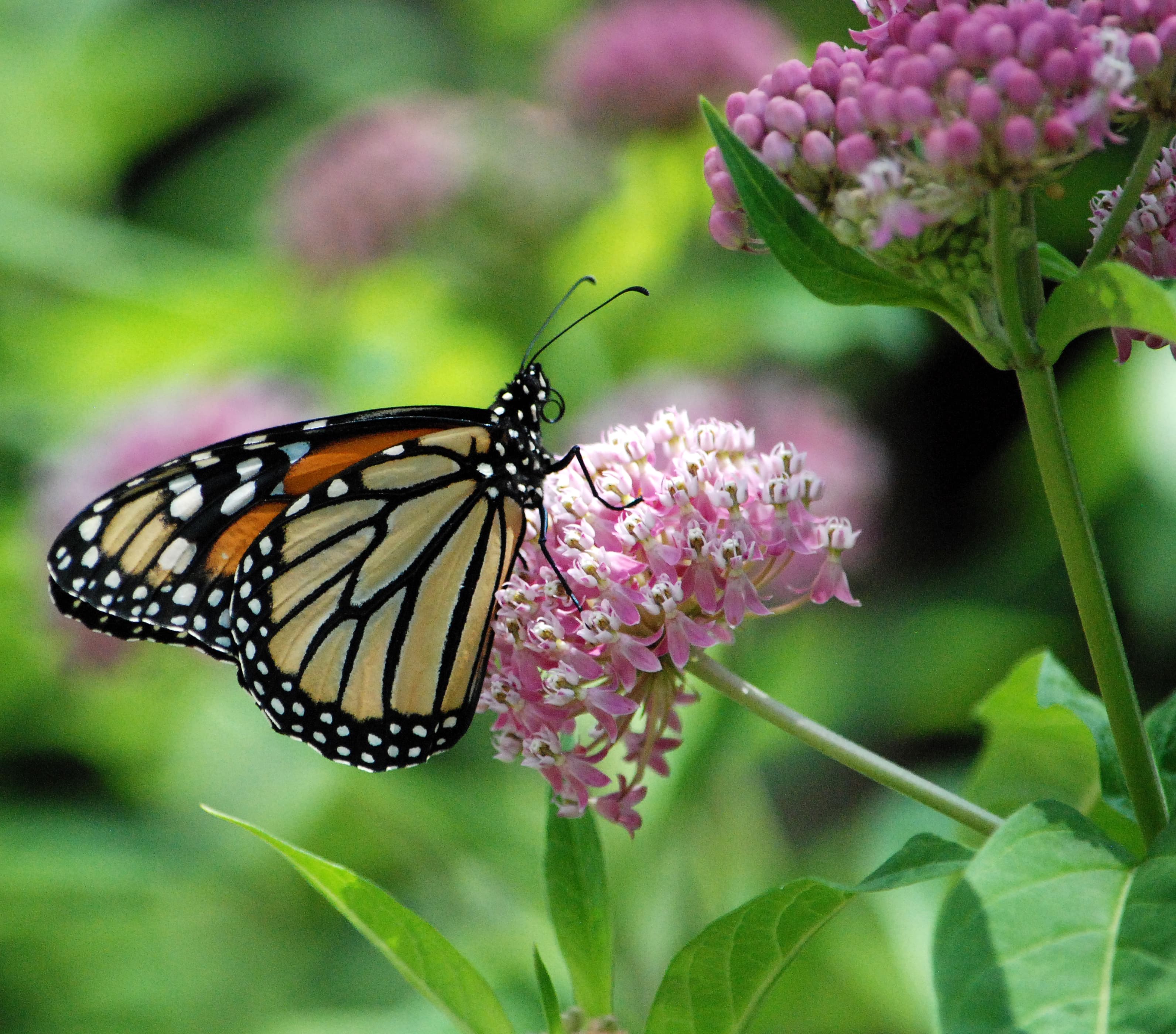
Milkweed is not just another pretty flower to tuck into any open space. It is a host plant, which means it may be chewed. Some types get tall, some spread, and some look rough after doing exactly what you planted them to do. That is valuable, but it needs honest placement.
In a tidy border, milkweed usually belongs in the middle or back, with enough surrounding plants to keep the bed full when the leaves are being used. If the border is very narrow, it may be better to grow milkweed in a separate sunny patch than force it into a formal front edge where every chewed leaf feels like a problem.
The point is not to hide habitat. The point is to place habitat where its natural messiness does not make the whole border look neglected.
A tidy pollinator border does not need constant fussing. It needs timely editing. Keep the front edge visible. Cut back stems that fall across paths. Remove weeds while they are small enough that you do not disturb the whole planting. Deadhead only where it improves the next flush or keeps the entrance from looking tired.
Do not cut everything down at once in fall just because the calendar changes. Remove diseased material and stems that collapse into walkways, but leave some seedheads and standing stems where they can provide food, shelter, and winter texture. A staged cleanup is often better for wildlife and better for the look of the bed.
The border outside the library worked because someone understood that maintenance is not the enemy of habitat. Maintenance is how habitat stays welcome in places where people also have to walk, park, visit, and live.